I run community work
Community-rooted organizations
The work is real and long-standing. The way capital reads it is the problem.
For organizations →DSG helps community-rooted organizations strengthen how their work is understood, costed, evidenced, positioned, and financed — and helps institutions make better decisions about what their processes may be missing.
The middle is not neutral.
Three doors. Choose the sentence that sounds like your work.
The work is real and long-standing. The way capital reads it is the problem.
For organizations →The same organizations keep rising to the top. What is the process unable to see?
For foundations →You are accountable for community investment and need a decision you can defend.
For institutions →Intention, allocation, and the decision made in the room.
Populated. Never neutral.
Select a term. Each one edits what arrives on the other side.
What a community actually experiences after the decision leaves the room.
Do not confuse where the failure appeared with where the failure was designed.
Read the whole situation — the work, the money, the rules, the relationships, and the history already shaping the decision.
Turn community truth and long practice into terms an institution is permitted to credit, without translating away the community.
Build the case, the evidence record, and the true cost of the work so the numbers and the claim agree.
Decide which money belongs with which part of the work, and in what order. Grant-only is a plan that runs out.
Take one real opportunity forward — an application, a relationship, a brief, or the next concrete step.
What you built stays yours and gets reused. You do not start over the next time capital asks.
Different buyers need different work. The Studio gives each path a real problem, a real build, and a clear next step.
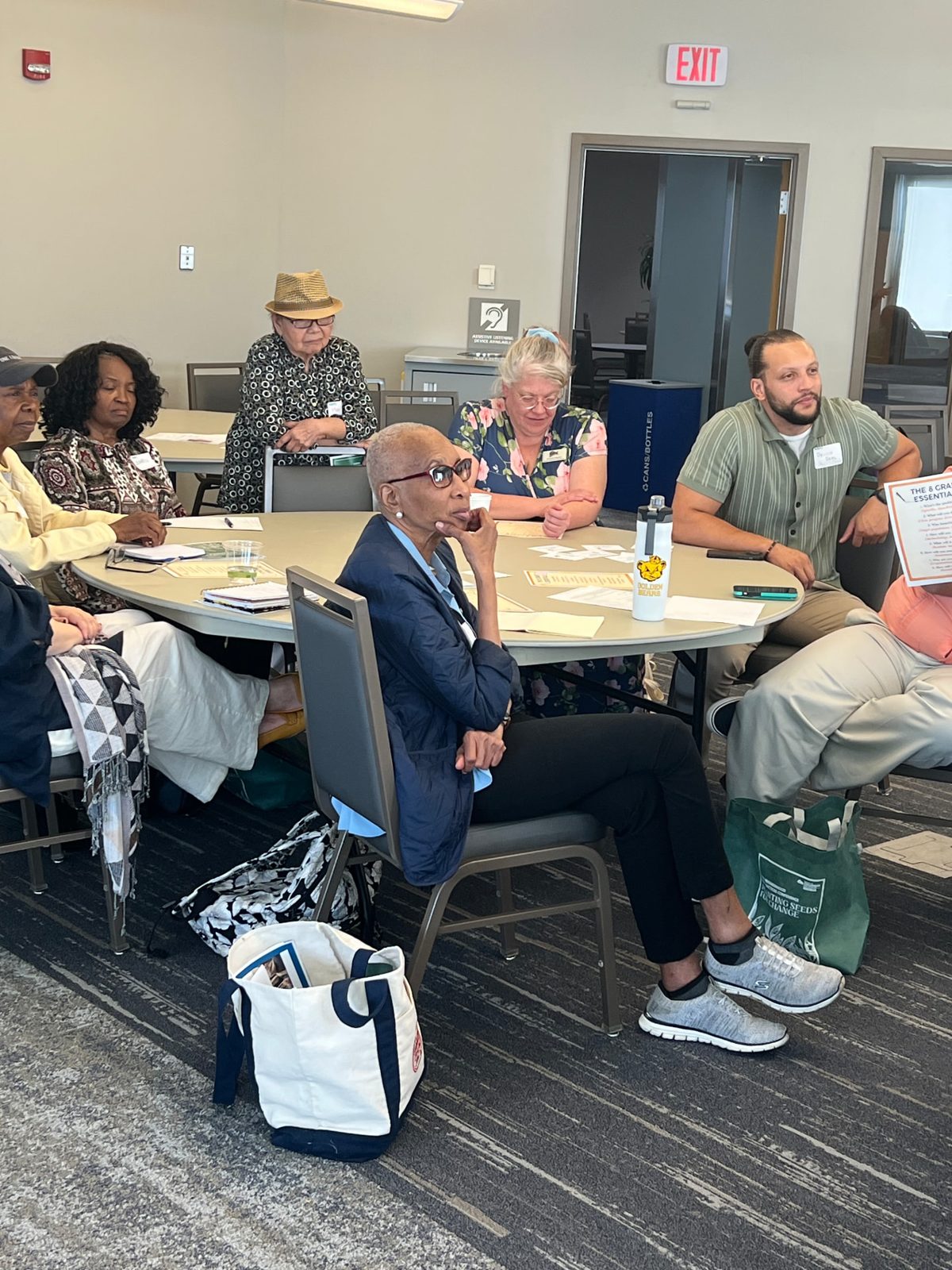
Founder & Principal of Deena Strategic Group. A systems thinker on capital, culture, and consequence, working across philanthropy, public and corporate capital, community investment, and capital strategy.
Strategy is access.
The full positionThe capacity language was describing a documentation gap, not an operating gap. The work being financed was already running; the evidence for it lived in relationships and staff memory rather than in a form the reviewer was permitted to credit.
A documentation and evidence structure that carried what was already true, plus a corrected cost basis and a capital route matched to the actual decision-maker.
No outcome is published here until a human has verified it. Whether the correction moves the decision, and whether the reviewer's standard changes on the next cycle.
Say it plainly, in your own words. A person reads it and tells you what the real problem is — and what to do next.